Clio Chigwell
Blood ShotClio Chigwell, the seventy-nine-year-old twin sister of Dr. Curtis Chigwell, moves from shielding her brother to confronting the damage caused by his secrecy. At first she tries to keep V. I. Warshawski away from him; later she exposes how readily he lies, preserves the original records he tried to destroy, and enters the dangerous Xerxes plant to find him. Her loyalty is real, but it is not limitless: the story’s decisive change is her choice to stop serving as Curtis’s cover and to act on her own judgment.
Identity and Background
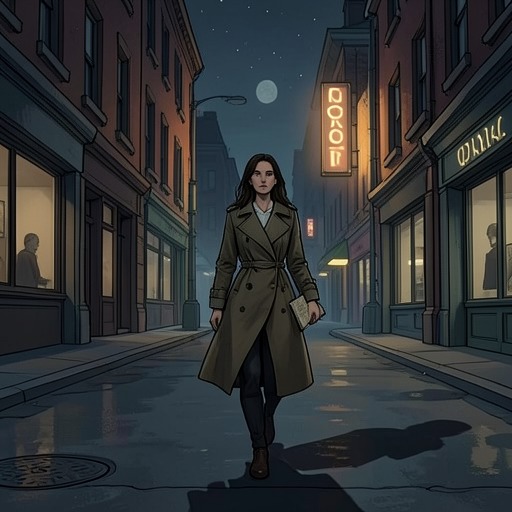
Clio first appears at the door of the Chigwell home in Hinsdale, an old woman in a severe navy dress, her frown seeming habitual rather than personal. She is Curtis’s twin, and her familiarity with him is both a source of authority and a constraint. She knows what he wants before he has to say it, and admits that after so many years she has acquired the bad habit of helping him maintain his lies. Their shared history has made refusal difficult, even when she recognizes the dishonesty involved.
The house gives her a setting of order and inheritance. Inside are a rose-marble fireplace, an old clock, porcelain figures, and family photographs; elsewhere, Clio keeps a sitting room with a rocking chair, knitting basket, typewriter, and flowering plants. This carefully maintained domestic world contrasts with the secrets surrounding Curtis’s work at the Xerxes plant. It is also a place where Clio has quietly exercised control: among the books and flowers, she has kept the original notebooks that Curtis assumed were no longer in her possession.
Clio’s life has been organized around her brother’s needs, but it has not erased her own wishes. She tells Warshawski that she has always wanted to visit Florence, yet Curtis would not travel outside the country because he feared illness from food or water and suspected foreigners of cheating him. The wish is modestly stated, but it exposes the cost of a life spent accommodating his anxieties. Warshawski urges her not to spend the rest of her life waiting for him, and Clio accepts the description of her as brave.
Guarding Curtis, Then Challenging Him
When Warshawski first arrives to ask about blood tests and medical histories Curtis collected from Xerxes employees, Clio says he has gone out and insists that he does not want to speak with the investigator. She has not actually checked with him; she is relying on her knowledge of her twin. After Warshawski waits outside, Clio returns and admits that Curtis was home all along. She has been telling his lies, she says in effect, because after so many years it is hard to begin saying no.
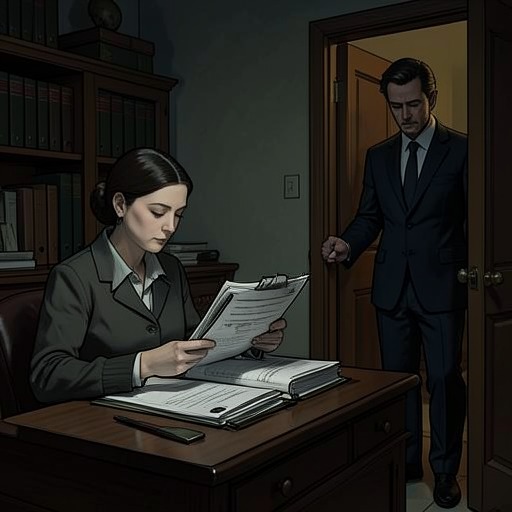
Curtis’s appearance makes the strain between them visible. His cheeks are flushed after an argument with Clio, who has challenged him about his dealings with the law. When Warshawski raises the employee records, he angrily denies ever conducting the tests and threatens to call the police. Clio does not defend his outburst or pretend she understands the records. She says that patient confidentiality prevents Warshawski from simply demanding information, but still tells her to leave. Her response shows the boundary she is trying to hold: she will not casually betray medical confidences, even as she becomes less willing to protect Curtis from the consequences of his own conduct.
On a later telephone call, Clio initially remains guarded. She remembers Warshawski and checks with Curtis, who again does not want to speak. But when Warshawski asks whether Gustav Humboldt has recently contacted him, Clio is surprised by the question and goes to confront her brother. She returns after about fifteen minutes with Curtis’s account: he says he knew that Joey Pankowski was Caroline Djiak’s father because Caroline’s mother had told him when she was hired. Clio cannot verify which part of Curtis’s story is false. What she does know, she tells Warshawski, is that Curtis would say anything Humboldt instructed him to say.
Her decision to pass on this warning is a clear break from her earlier role as gatekeeper. Asked why she is helping, Clio does not offer a polished justification; she seems surprised by her own choice. After seventy-nine years, she is tired of Curtis hiding behind her. The statement does not cancel her attachment to him, but it establishes that she can distinguish affection and habit from obedience.
The Notebooks and the Evidence She Keeps
Clio becomes central to the investigation when medical notebooks disappear from the Chigwell home. She explains that Curtis had tried to burn them, so she hid them from him. The missing books, she believes, may reveal what he was involved in at Xerxes and what he did not want Warshawski to discover. Her account clarifies an important distinction: the stolen volumes are Curtis’s copies. Clio has kept the originals, without telling him.
Those originals are bound diaries belonging to their father, Horace Chigwell, M.D. Clio brings out twelve green, leather-bound volumes, spanning twenty-eight years. Curtis had coveted them, and she had allowed him to use them; after the war, he never acquired personally bound diaries of his own. She had typed up his notes over the years. The old volumes appear to record the medical histories of Xerxes employees, with names rendered difficult to read by their father’s neat, spidery handwriting. Their numbered specimen system had required separate records, and Curtis used his own notebooks to track employees by name. Clio’s concealment therefore preserves more than family keepsakes: it safeguards the underlying record against both Curtis’s attempt to burn his notes and the theft of his copies.
She does not claim to know why Xerxes began the blood work. She remembers Curtis’s agitation over sending specimens to a laboratory and maintaining separate, numbered records. This limited knowledge is significant: Clio can testify to the practical arrangements and to Curtis’s behavior, but she does not pretend to understand the larger scheme. Her value to Warshawski comes from the precision of what she has observed and the physical evidence she has kept, not from an omniscient account of the company’s motives.
Choosing to Act
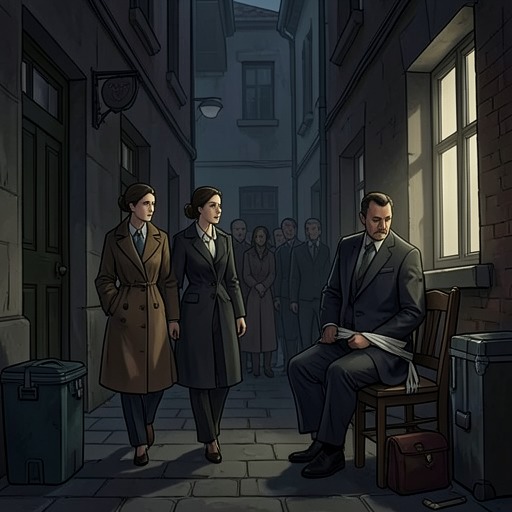
Clio’s change becomes most visible at the Xerxes plant. She accompanies Warshawski inside, moving through a manufacturing area of hissing pipes, steam, and cauldrons beneath green safety lights. There she sees Louisa Djiak lying on a stretcher, with Curtis on one side and Art Jurshak on the other. The discovery transforms Clio’s concern from a private dispute with her brother into direct intervention in a dangerous situation.
She marches toward Curtis, and Warshawski restrains her to keep her out of Art’s reach. Clio nevertheless speaks with authority over the noise of the plant. She has come to find her brother, she tells him in substance; he has become entangled with dangerous people, and she presumes he has been with them for the past week. She invokes their dead mother, then gives Curtis a concrete way out: help Warshawski get the sick Louisa back into the ambulance and return with Clio to Hinsdale. Her appeal combines family memory with immediate responsibility. Rather than merely demanding that he explain himself, she offers a course of action that begins with helping the endangered woman.
Art counters by threatening Louisa’s life, claiming Curtis has a needle ready to inject her. Clio’s intervention does not itself resolve the danger, and the evidence does not show what becomes of her plan to take Curtis home. Its significance lies in the reversal it makes unmistakable. The woman who once let her twin’s lies pass because saying no had become difficult now enters the plant, faces the people endangering Louisa, and calls Curtis back to accountability. Her loyalty has not vanished; it has changed its terms. She will help her brother return, but not by hiding what he has done or abandoning someone who needs rescue.
Narrative Role and Significance
Clio’s importance develops through a sequence of disclosures rather than a single revelation. At first she obstructs access to Curtis; then she acknowledges the lie, passes on information about Humboldt’s influence, explains the missing notebooks, produces the originals, and finally confronts Curtis at the plant. Each step converts private knowledge into evidence or action. Her home, her memory of Curtis’s habits, and her decision to keep the diaries all become part of the investigation’s chain of discovery.
She also complicates the idea that family loyalty requires silence. Clio has spent much of her life accommodating her twin, yet she is not reduced to either a devoted caretaker or a hostile accuser. She can respect medical confidentiality, resent Curtis’s dependence on her, enjoy his company enough to remain concerned about him, and still refuse to keep covering for his lies. Her unfulfilled wish to see Florence gives that change a personal measure: a future of her own remains imaginable, even after decades shaped by her brother’s fears. By the time she reaches Louisa at Xerxes, Clio’s concern for Curtis has become inseparable from a demand that he stop hiding and help someone in immediate danger.